
• What Does a First-Time Landlord in Georgia Need to Know?

    What Does a First-Time Landlord in Georgia Need to Know?

    Quick answer (TL;DR)

    Before your first tenant moves in, you need clear title in your name, a habitable property, a written lease, and the security deposit in a separate escrow account. Georgia law gives you 30 days after move-out to return the deposit. Evictions require a court dispossessory proceeding. Get those four things right before handing over keys and you will avoid most of what trips up first-time landlords in Lumpkin County.
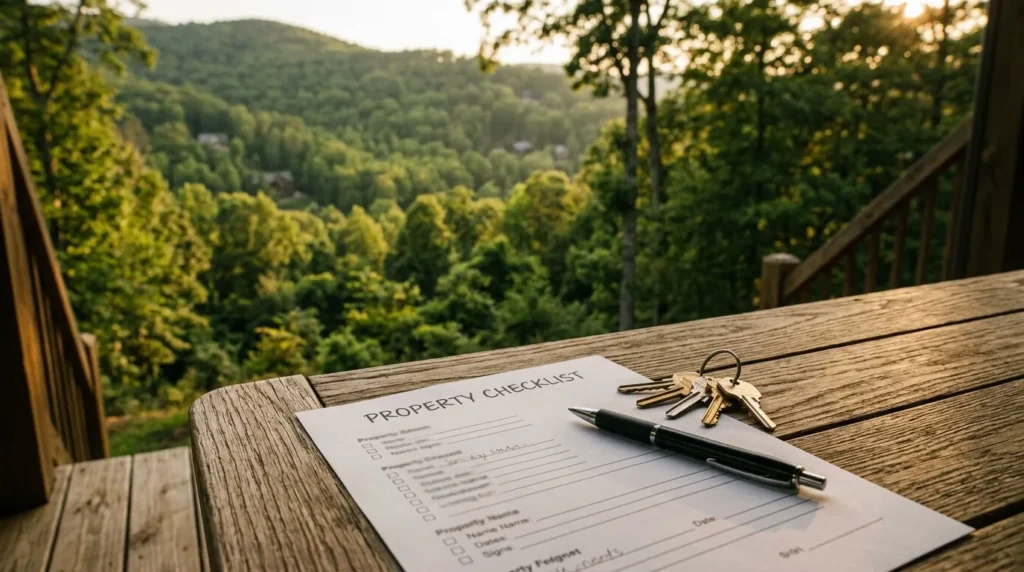
    Renting a property in Georgia for the first time is a legal undertaking. Before signing anything in Lumpkin County or anywhere in North Georgia, four things need to be in place: clear title, a habitable unit, a written lease, and a proper deposit account.

    30 daysGeorgia’s deadline to return a security deposit after move-out (O.C.G.A. §44-7-33)
    No capGeorgia sets no maximum on security deposit amounts
    Escrow requiredDeposits must be held in a separate bank account or covered by a surety bond
    Court onlyEvictions require a dispossessory proceeding in Magistrate Court

    What you need before the lease is signed

    Start with title. If you inherited the property or are still in probate, get that resolved first. A lease signed while title is unclear can be unenforceable, and if something goes wrong during the tenancy, you want no ambiguity about who owns the property. File the deed, confirm it with the county, and keep a copy.

    Then confirm the unit is habitable. Georgia law requires landlords to provide a property that is safe and functional at move-in and to maintain it that way throughout the tenancy. That means working plumbing and heat, a watertight structure, and functional smoke detectors. Have a licensed inspector walk the property before you list it. If there are problems, fix them before you have a tenant who can withhold rent over them.

    Lead paint disclosure is required on pre-1978 properties

    Federal law requires landlords to disclose any known lead-based paint hazards and provide the EPA informational pamphlet before a lease is signed on any home built before 1978. This applies to a large share of older mountain-area homes in Lumpkin County. It is not optional and cannot be handled after move-in.

    Use a written lease. A verbal agreement is enforceable in Georgia for month-to-month tenancies, but it gives you almost nothing to stand on if the tenant disputes rent, damages, or move-out terms. At minimum, the lease should cover rent amount, due date, late fees, how and when you can enter the property, and what the move-out process looks like. Have an attorney review it once before your first tenant signs.

    Before move-in, photograph every room with date-stamped photos and document the condition in a written checklist. Have the tenant sign it. This becomes your evidence if there is a deposit dispute later.

    • Confirm clear title is recorded with the county in your name
    • Complete a licensed inspection and fix any habitability issues
    • Provide a lead paint disclosure if the property was built before 1978
    • Use a written lease covering rent, late fees, entry terms, and move-out procedure
    • Document condition with dated photos and a signed move-in checklist

    Security deposits in Georgia

    Georgia’s security deposit rules are in O.C.G.A. §44-7-30 through §44-7-37. Landlords who skip the escrow requirement usually find out about the law only when a tenant files in Magistrate Court, at which point the penalty is double the withheld amount plus attorney fees.

    The statute requires you to hold the deposit in a separate bank account at a federally insured institution, completely apart from your own funds. Mixing it with your operating money is a violation. Alternatively, you can purchase a surety bond for the deposit amount. Most individual landlords use the escrow account; management companies handling multiple units use bonds more often.

    1. Open a dedicated escrow account before collecting anything It holds only security deposits. Nothing else. Do this before the tenant signs.
    2. Return within 30 days of move-out After the tenant vacates, you have 30 days to return the full deposit or send a written itemized list of deductions with any remaining balance. Miss that deadline and you forfeit the right to withhold anything.
    3. Itemize deductions specifically “Cleaning” is not enough. The list needs the specific damage and the cost to repair or replace it. Vague lists get challenged in Lumpkin County Magistrate Court regularly.
    4. Know what you can and cannot deduct Unpaid rent, cleaning costs beyond reasonable use, and actual damage the tenant caused are deductible. Normal wear and tear is not. Carpet worn from two years of ordinary use, minor scuffs, small nail holes: those come out of your maintenance budget.

    Georgia sets no cap on deposit amounts. One month’s rent is common; two months comes up with pets or when a tenant’s credit profile raises concern. Whatever you charge, verify it against current practice in the Dahlonega rental market.

    Common question

    Can you keep the deposit if a tenant breaks the lease early? Only for documented losses: unpaid rent until you re-let the unit, re-letting costs, and actual damages above normal wear. Georgia follows a duty-to-mitigate rule. You cannot collect the full remaining rent on an empty unit while making no effort to find a new tenant.

    Setting rent and screening tenants in North Georgia

    The Dahlonega and Lumpkin County rental market is smaller than Atlanta. Demand comes mainly from workers at local healthcare facilities, University of North Georgia employees and students, and the service sector. What a comparable house rents for in Canton or Gainesville is not a reliable guide to what yours will fetch in Dahlonega. Set rent based on comparable active listings in the immediate area. A property manager can give you a rental market analysis faster and more accurately than online tools. For more on what owners in this area typically earn, see the guide to how much you can rent your Dahlonega house for.

    A landlord who prices on what they need to cover the mortgage rather than what comparable rentals charge typically ends up with a vacancy, or a tenant who eventually stops paying because the rent was never realistic.

    Tenant screening must follow the federal Fair Housing Act. You cannot decline applicants based on race, color, national origin, religion, sex, familial status, or disability. You can screen on income (a common standard is gross monthly income of 2.5 to 3 times the monthly rent), credit history, rental history, and criminal background. Whatever criteria you use, write them down before you start advertising and apply them the same way to every applicant.

    The screening step is where many first-time landlords run into trouble, either by applying criteria inconsistently or handling it informally. Running screening through a compliant third-party service reduces fair housing exposure. For a full walkthrough from listing to lease, see the overview of renting out your Dahlonega home.

    Screening factorCommon approachNote
    Income2.5 to 3 times monthly rent in gross incomeApply consistently to all applicants
    CreditReview the full report; no minimum score required by lawDocument your threshold in writing before advertising
    Rental historyContact previous landlords; ask about payment and property careA prior eviction is generally disqualifying
    Criminal backgroundReview; apply criteria consistentlyBlanket criminal bans carry fair housing risk; consult an attorney before setting policy
    PetsYour choice; if allowed, specify terms in the lease and collect a pet deposit or non-refundable feeService animals and emotional support animals have separate legal protections

    When a tenant stops paying

    Late or missing rent is the situation first-time landlords are least prepared for. Georgia gives you a clear legal process. It is slower than most people expect and more procedural than most want.

    You cannot change the locks, remove belongings, or cut off utilities to push a tenant out. Those actions are illegal in Georgia regardless of how much rent is owed. A tenant can sue you for damages even while owing you money, and courts in Georgia take that seriously.

    Self-help eviction is illegal in Georgia

    Changing locks, removing doors, or shutting off utilities to force a tenant out is unlawful. The only legal path is a court dispossessory proceeding. Landlords who skip this expose themselves to civil liability, sometimes to the same tenant who owes them rent.

    The correct process starts with a demand. Most landlords send a written demand giving the tenant three to seven days to pay or vacate before filing a dispossessory petition. Georgia statute does not specify a minimum demand period for nonpayment, but your lease terms and standard practice govern this step. After that, you file a dispossessory petition with the Lumpkin County Magistrate Court. The court serves the tenant, a hearing is scheduled, and if judgment is in your favor, you receive a writ of possession.

    In an uncontested case, the timeline from filing to writ in Lumpkin County typically runs several weeks to a couple of months. A contested case or an appeal takes longer. That timeline is one reason many landlords who have self-managed for years end up hiring professional management after their first eviction. For a broader look at Georgia landlord obligations, see the guide on Georgia landlord-tenant law in Lumpkin County.

    When to hire a property manager

    Property management is not required. But for first-time landlords in Dahlonega and Lumpkin County, the question deserves a serious look. Managing a rental yourself takes real time: screening calls, lease execution, rent collection, maintenance coordination, and possibly a dispossessory proceeding in year one.

    Property managers in North Georgia generally charge 8% to 12% of collected monthly rent. Verify current rates directly with local firms before making this decision. For that fee, they handle tenant sourcing, lease signing, rent collection, maintenance coordination, and early legal steps when someone defaults. For owners who live more than an hour away, that cost often pays for itself after the first maintenance emergency or missed rent cycle. If you recently inherited this property, see the guide on renting out an inherited house in Georgia.

    Common question

    Is a property manager worth the cost for a single rental? For owners who live nearby and have time to handle calls and coordination, self-management can work. For out-of-area owners or anyone with a demanding primary job, the 8% to 12% management fee typically costs less than one mishandled maintenance situation or a first eviction handled without experience.

    The first year carries the steepest learning curve. Georgia’s security deposit law, habitability standards, and the dispossessory process all have procedural requirements that are easy to miss. A property manager who has processed dozens of Lumpkin County evictions knows the local Magistrate Court in a way that a general guide cannot replicate.

    Frequently Asked Questions

    How much can I charge for a security deposit in Georgia?

    Georgia law sets no cap on security deposit amounts. One or two months’ rent is common. Whatever you collect must be held in a separate escrow account or covered by a surety bond under O.C.G.A. §44-7-30.

    How long do I have to return the security deposit after a tenant moves out?

    Thirty days. Under O.C.G.A. §44-7-33, you must either return the full deposit or send an itemized list of deductions with any remaining balance within 30 days of the tenant vacating. Miss that deadline and you lose the right to withhold anything and may owe double the withheld amount plus attorney fees.

    What disclosures are required before a tenant signs a lease in Georgia?

    Federal law requires a lead paint disclosure and the EPA pamphlet for any property built before 1978. Georgia also requires disclosure of the name and address of the financial institution holding the deposit, or the surety bond details. Review current requirements with an attorney before your first lease.

    Can I evict a tenant in Georgia without going to court?

    No. Self-help eviction is illegal in Georgia regardless of how much rent is owed. The only lawful path is a court dispossessory proceeding filed with the appropriate Magistrate Court.

    Do I need a rental license to rent a house in Georgia?

    Georgia does not require a statewide landlord license for residential rentals. Some local jurisdictions require a business license or rental registration. Check with Lumpkin County and the City of Dahlonega to confirm whether any local requirement applies to your property.

    What does habitable mean under Georgia landlord-tenant law?

    Georgia requires landlords to maintain a habitable condition at move-in and throughout the tenancy. That generally means functional plumbing, effective heating, a watertight structure, working smoke detectors, and no serious structural hazards. A licensed inspector can identify specific deficiencies before you advertise.

    Can I include a no-pets clause in my Georgia lease?

    Yes. Georgia law allows landlords to prohibit pets. However, service animals and emotional support animals have protections under the Fair Housing Act and the Americans with Disabilities Act. A no-pets clause cannot be applied to those animals. If you allow pets, specify the terms in the lease and collect a separate pet deposit or non-refundable fee.

    What are the most common first-time landlord mistakes in Georgia?

    Commingling the deposit with personal funds (which violates O.C.G.A. §44-7-30), renting before title is clear, using a vague or verbal lease, and attempting self-help eviction when a tenant defaults are the most common and most expensive first-year errors. Each one has a straightforward fix if you set it up correctly before move-in.

    What happens if a tenant breaks the lease early in Georgia?

    Georgia follows a duty-to-mitigate rule. If the tenant breaks the lease, you must make reasonable efforts to re-rent the unit. You can only recover actual losses: unpaid rent until you re-let, re-letting costs, and documented damages above normal wear and tear.

    Do I need to give notice before entering the rental property?

    Georgia statute does not set a minimum notice period for landlord entry. Your lease terms govern this. Standard practice is reasonable advance notice, typically 24 hours, except in genuine emergencies. Specify entry notice terms explicitly in the lease.

    How does Georgia security deposit law treat damage deductions?

    You can deduct for unpaid rent, cleaning costs beyond normal wear, and actual damage caused by the tenant. Normal wear such as minor scuffs, carpet wear from ordinary use, and small nail holes is not deductible. Document property condition with dated photos and a signed checklist before and after every tenancy.

    What income should I require from a prospective tenant?

    A commonly used standard is gross monthly income of 2.5 to 3 times the monthly rent. Document your threshold before you start advertising and apply it consistently to every applicant. Inconsistent application creates fair housing exposure.

    Thinking about Dahlonega and Lumpkin County real estate?

    Whether you are ready to sell a property you have been renting or looking for your next investment in North Georgia, Gold Peach Realty knows this market.

    Talk to a Lumpkin County real estate expert at Gold Peach Realty

    or call (770) 283-1223